
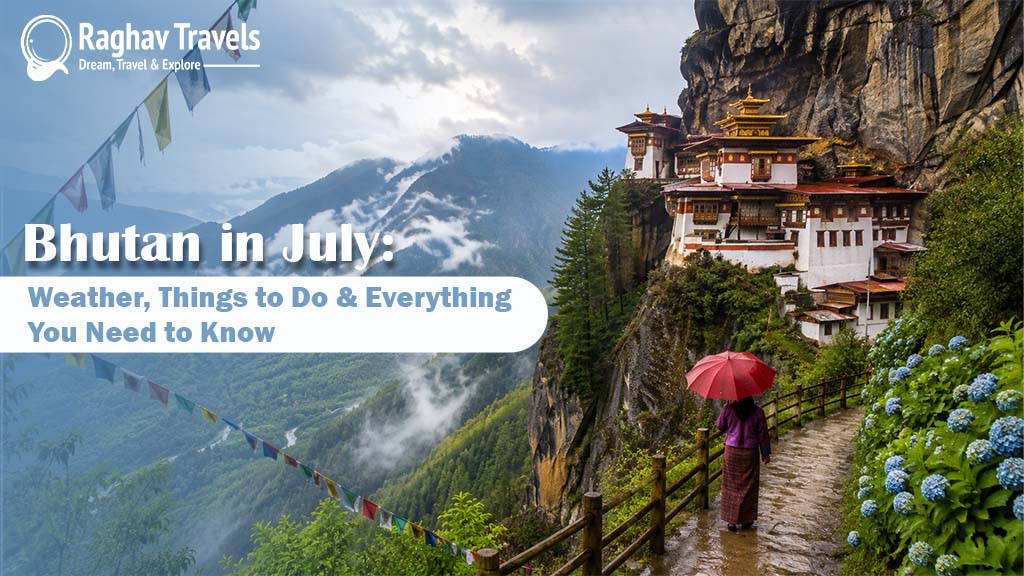
Rain doesn’t cancel Bhutan. It changes it.
That’s the first thing to know about this month. The valleys turn a deeper green. The waterfalls get louder. The crowds disappear. And somehow, the kingdom feels even more like itself.
Most travel guides tell you to skip July. Fair warning: skip it, and you skip one of Bhutan’s quietest, most honest seasons.
Let’s talk about what Bhutan in July actually looks like. No sugar-coating. No scare tactics either.
Why This Season Confuses So Many Travelers
If you search the internet for the best time to visit Bhutan, July is hardly mentioned. It will certainly be within the monsoon window, which is why the majority of blogs wave you goodbye towards autumn.
However, there is this thing. The Bhutan tourism industry is not in mourning during July. It’s just different. Fewer buses. A reduction in the number of selfie sticks at Tiger’s Nest. More space to breathe, think, and genuinely be aware of where you are.
This is not your month if you’re looking for postcard skies and reviewing the festival crowd. If you desire to visit Bhutan without the noise, read on.
Bhutan Weather in July: The Honest Breakdown
Let’s get specific. You might think of July as being hot, damp, and rainy, but Bhutan is a place where it’s warm, humid, and rainy.
Rain is generally in small, sharp amounts. Not days and days of gray. Mornings are frequently sunny. Clouds develop in the afternoon. Then a downpour, and as quickly as that, it’s gone once more.
Thimphu and Paro have temperatures in the range of 20-24°C throughout the day, while Punakha is a little warmer and more humid due to its lower elevation. As one ascends to areas such as Bumthang, nights get somewhat colder.
Color is what July weather in Bhutan has to offer that is not found in other seasons. Rice fields change colour to a magnificent green. Roadside wild orchids are in bloom. Rivers run powerfully through the ravines.
Pack for an entire day. An afternoon light rain jacket. Layers for the chilly nights. Good grip shoes, as trails and stone steps tend to be slippery.
Bhutan in July, Region by Region
The weather is not uniform throughout this tiny kingdom, and you should know this before embarking on a journey.
Paro: Sunny and cool, with occasional showers in the afternoon. Tiger’s Nest is open, but near the summit is muddy.
Thimphu: Slightly colder and with similar rainfall to Paro. Dryer days, such as the National Memorial Chorten and local markets, are good for indoor sightseeing.
Punakha: Warmer, more humid, and perhaps more dramatic than anywhere else this month. High, fast, and photogenic are the rivers around Punakha Dzong.
Bumthang and Central Bhutan: Cloudy nights, some traffic delays due to rain. Ideally best explored with some flexibility in the programme.
Being aware of this spread of the area is a great help when making the decision on where to most likely spend the majority of your vacation.
What You Can Actually Do in Bhutan in July
Let’s get to the part where most articles go astray. They put this month together with “Avoid this season,” and they are done. But there are still many open and worthy sights to be seen.
Thimphu and Paro sightseeing: Dzongs, monasteries, and markets don’t shut down during the rainy season in Thimphu or Paro. It is a comfortable and pleasant visit to Tashichho Dzong (the weekend market) and the National Museum in Paro even on a rainy day.
Punakha Dzong: Very impressive even in the rainy season. The Pho Chhu and Mo Chhu rivers flow around the fortress in a high and fast current, and the hills surrounding the fortress are a deep green color not seen during high season.
Haa Festival: The Haa Valley Festival takes place in July. It celebrates the traditional culture of local nomadic communities. Think archery, mask dances, yak herding, and local food. It’s one of Bhutan’s most authentic festivals. And still one of the least touristy.
Lower altitude walks: Punakha and the valley floor walks are easily done. Longer hikes at high altitudes such as Jomolhari should be avoided at this time as trails get muddy and leeches appear at lower altitudes.
Local food and hospitality: Farmhouse living and homemade cooking are specially cozy this month. Enjoy some ema datshi and butter tea, as it drips outside the windows.
Photography: This season is for those who appreciate saturated green landscapes, mist rolling over hillsides, and moody skies. July weather in Bhutan provides photographers with a dynamic, changing, dramatic sky which no other season can offer outdoors.
Honest Trade-Offs
Fair is fair. Here are some things that don’t work in this window.
Fog can roll in on high mountain passes. Long-distance views get blocked fast.
Landslides happen too. Especially in central and eastern Bhutan, right after heavy rain. Roads can close without warning.
Chasing a big Tshechu festival? Skip this season. Most major festivals happen in spring and autumn, not now.
For cultural sightseeing and exploring the valleys and for a more relaxed pace, the Bhutan tour in July is not bad.
What May Be the Smarter Trip
There are several reasons that bring visitors back to this window.
Reduced rates: Hotels and airline tickets tend to be cheaper during the monsoon season. You have more time on your hands.
Less congestion: No rushing to take pictures at Tiger’s Nest. Fully booked dzongs: none. Only you and your guide and a much quieter kingdom.
Lush, dramatic scenery: The hillsides become a rich green color. It’s a sharp contrast to the dry and dusty borders of peak season.
But if you’re looking for a quiet, affordable, and really green trip, then Bhutan in July has you covered. Travel with Raghav Travels and make memories to cherish.
Simple Tips for This Time of Year
- Book flexible activities. Allow buffer time for roads.
- Bring appropriate rain gear and quick-dry clothes.
- Avoid hilly trails.
- Start sightseeing early. In general, mornings are the clearest time of day.
- Carry insect repellent in lower valleys and forest trails.
- On drier days, have a dry bag for cameras and electronics.
There’s nothing complicated about any of this. It takes only a guide with a good understanding of the season.
Do not Miss Sustainable Development Fee (SDF)?
The SDF is the Sustainable Development Fee, and it applies to all tourists who come to Bhutan each day they spend there, so you must factor it into your plans for July! For most foreign visitors, it’s INR 1200 per night per person.
India has a different regional rate, and children below the age of six aren’t charged the SDF, with those aged six to twelve charged half the rate.
Your SDF is normally included in your tour cost as part of your travel and visa costs.
Frequently Asked Questions (FAQs)
Q1: Is it worth visiting Bhutan in July?
Q2: Does it rain all day during this month?
Q3: Can I still visit Tiger's Nest in July?
Q4: Is trekking possible this time of year?
Q5: Are flights to Paro affected by monsoon weather?
Q6: Is this a good month for a honeymoon trip?
Ready to Experience Bhutan in July?
Bhutan is beautiful in all the seasons. This one is the silent, enchanting, green, and misty one. It is quiet, clean, and uncrowded.
It’s about sitting, contemplating, sipping tea as the rain drips.
It’s about feeling connected to nature. It’s a peaceful retreat. Raghav Travels has organized many tours to Bhutan for many years across all seasons. We know the roads that remain dry during rains, valleys that bloom in monsoon, and the way to plan tours considering the seasonal challenges.
Get in touch with Raghav Travels today. Let’s plan your Bhutan trip, monsoon and all.